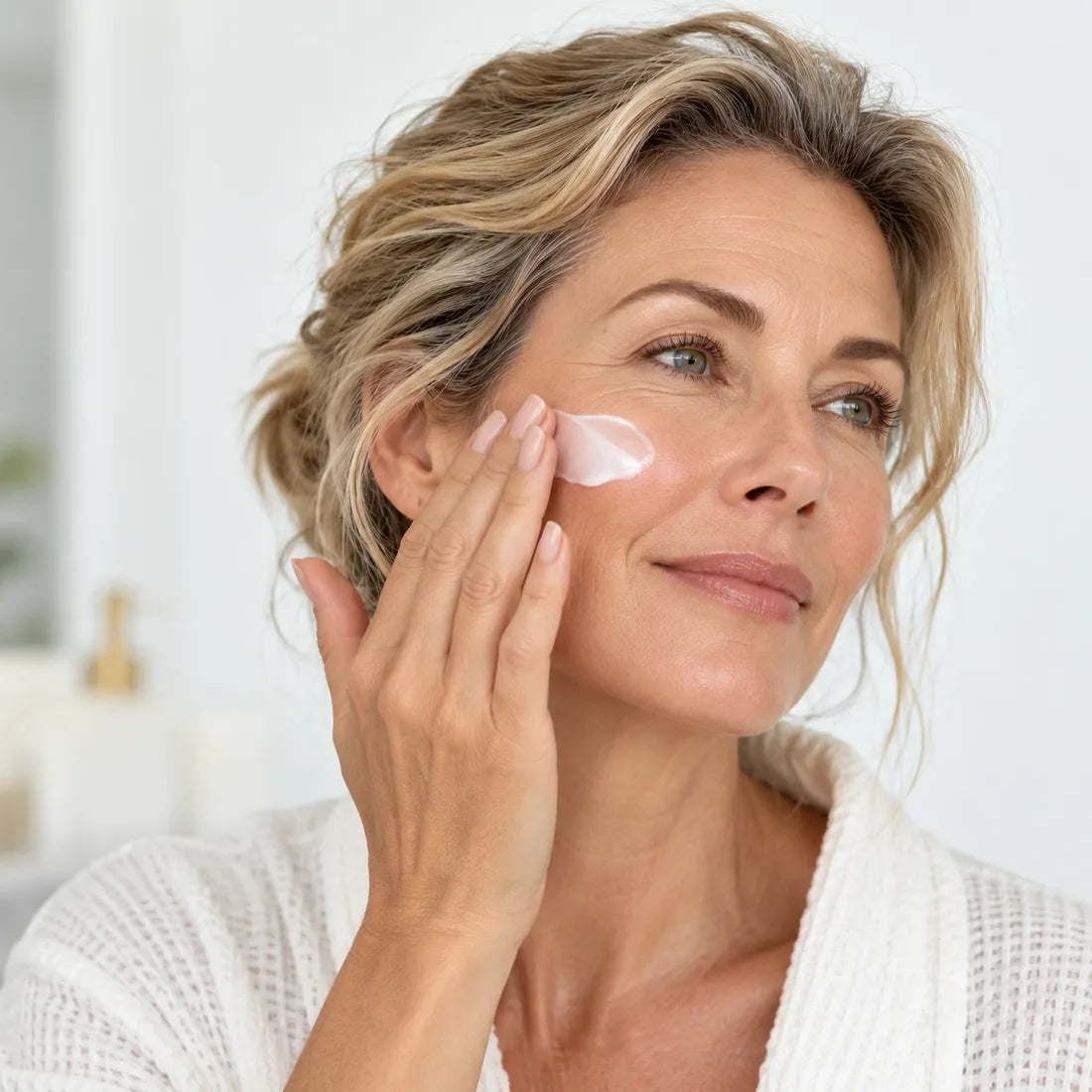
A simple morning and night routine for changing skin
When your skin starts to feel different, it's tempting to buy more: more serums, more steps, more promises. Often the opposite helps. A short, gentle routine is easier to stick to, and if something doesn't agree with your skin, it's much easier to find out what.
Morning: about one minute
- Rinse or cleanse gently. Lukewarm water is often enough in the morning. If you use a cleanser, choose a mild one.
- Moisturize. A lightweight cream that absorbs quickly works well under makeup. Our Day Cream is made for this step.
- Sunscreen. The American Academy of Dermatology recommends a broad-spectrum sunscreen with SPF 30 or higher on all uncovered skin, every day.[1] Don't skip this step, also not in winter.
Evening: about one minute
- Remove makeup gently. No rubbing or tugging. A two-phase remover like our Makeup Remover lifts makeup in a few soft strokes.
- Cleanse if needed, with a gentle cleanser and lukewarm water.
- Moisturize with a richer cream. Skin often feels tighter by the end of the day. A cushioning night cream such as our Night Cream, with mango seed butter and jojoba oil, helps it feel comfortable overnight.
Three small rules that help
- Moisturize while skin is slightly damp, right after washing.[2]
- Introduce one new product at a time and patch test it first.
- Choose fragrance-free, as dermatologists recommend for dry and easily irritated skin.[1][2]
What about retinol and actives?
Some women use products with retinol or other actives, and the AAD mentions retinol or peptides as options for wrinkles.[1] For dry skin, however, the AAD advises caution with retinoids.[2] If you want to add actives, ask a dermatologist how to combine them with your routine. A simple, fragrance-free moisturizer fits alongside most routines.
Start simple
The Day & Night Set covers the moisturizing steps, morning and night. Add the Makeup Remover with The Full Routine. Your sunscreen is the only other thing you need.
Sources
- American Academy of Dermatology. Caring for your skin in menopause. aad.org
- American Academy of Dermatology. Dermatologists' top tips for relieving dry skin. aad.org
This article is for general information only and is not medical advice. Our products are cosmetics and are not intended to treat or prevent any condition.