Dry skin in perimenopause: 8 habits dermatologists recommend
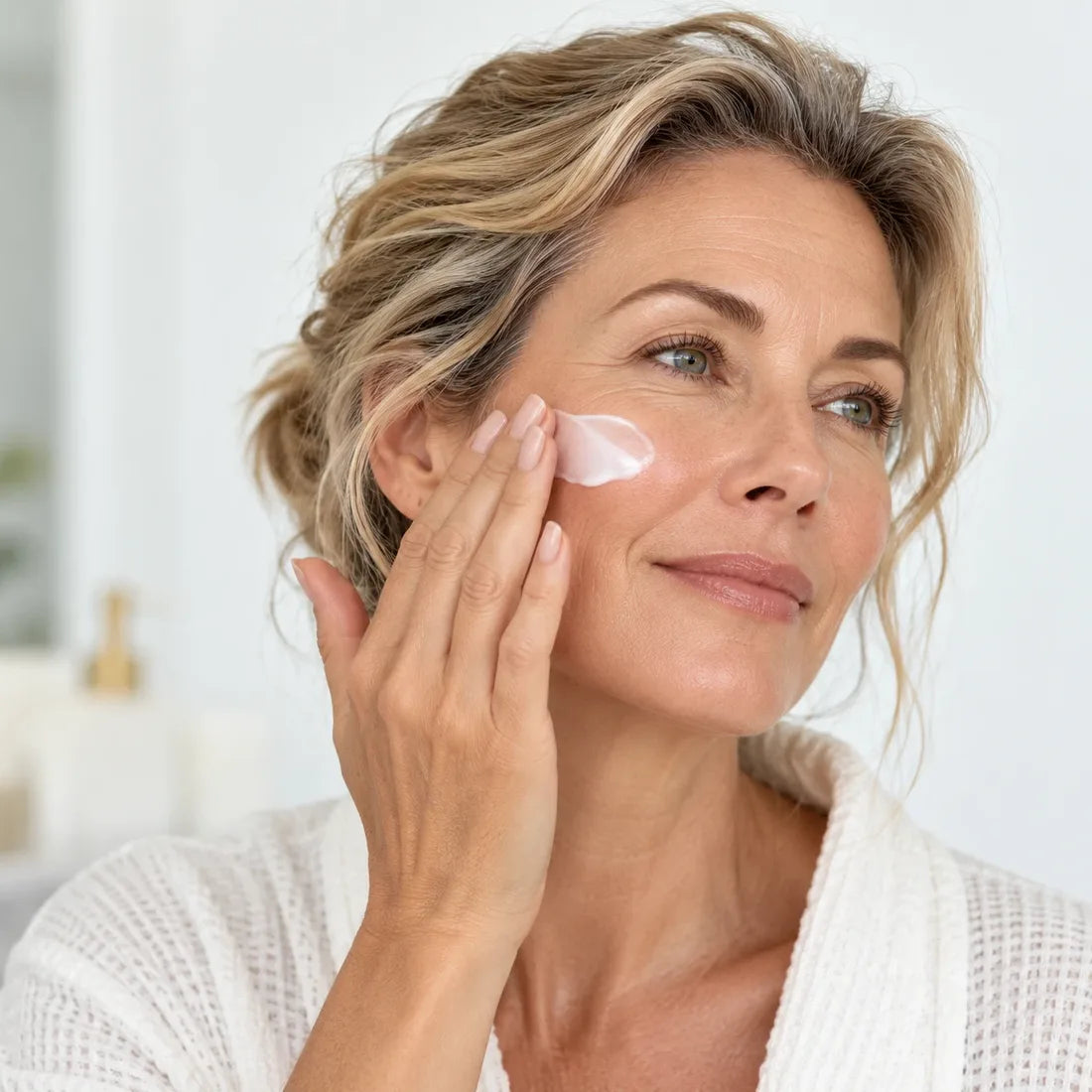
Many women notice that their skin feels drier in perimenopause and after menopause. The American Academy of Dermatology (AAD) explains that skin loses some of its ability to hold water during menopause, which is why it can become quite dry.[1] The good news: small daily habits can help your skin feel more comfortable. These are based on the AAD's advice for dry skin.[2]
1. Keep showers short and warm
Limit baths and showers to 5–10 minutes, in warm rather than hot water. Close the bathroom door to keep the steam in, and pat your skin dry with a towel instead of rubbing.
2. Use a gentle cleanser, and not too much of it
Choose a mild cleanser instead of soap, and avoid deodorant bars.[1] Use only as much as you need to remove dirt and makeup. You don't need a thick lather.
3. Moisturize while skin is still damp
Apply moisturizer right after bathing, and again whenever your skin feels dry. Creams are often a better choice than lotions for dry skin. Ingredients the AAD mentions include glycerin, hyaluronic acid, jojoba oil and shea butter.[1][2]
4. Choose fragrance-free products
The AAD recommends gentle, fragrance-free products for dry skin, and a fragrance-free moisturizer for skin that is easily irritated.[1][2] Be careful with "unscented": it is not the same thing. Read why.
5. Wear sunscreen every day
Use a broad-spectrum sunscreen with SPF 30 or higher on all uncovered skin, every day, also in winter.[1]
6. Add moisture to the air
A humidifier, for example in your bedroom while you sleep, can help when the air is dry. Clean it regularly to prevent mold.[2]
7. Protect your hands
Wear gloves when you wash dishes, garden or go out in cold, dry weather, and apply hand cream after washing your hands.[2]
8. Be gentle with exfoliation
Skin can become thinner after menopause. The AAD advises seeing a dermatologist before trying exfoliation or microdermabrasion at home.[1]
When to see a dermatologist
If your skin stays very dry, itchy, red or painful, or a rash doesn't go away, please see a board-certified dermatologist. Sometimes there is an underlying condition that needs treatment.[1][2]
Keep it simple
You don't need a ten-step routine. A light cream in the morning, a richer one at night and sunscreen is a good place to start. That's exactly why we made the Day & Night Set: two truly fragrance-free creams with glycerin, jojoba oil and hyaluronic acid.
Sources
- American Academy of Dermatology. Caring for your skin in menopause. aad.org
- American Academy of Dermatology. Dermatologists' top tips for relieving dry skin. aad.org
This article is for general information only and is not medical advice. Our products are cosmetics and are not intended to treat or prevent any condition.